Showing posts with label DW. Show all posts

Monday, January 10, 2011

DW 3000 Bass Drum Pedal Unites Playability & Affordability


Let’s put it this way, coming from personal experience, this is a piece of gear that can make your gig an inferno. Either you have a kick pedal that does the job or you have one that doesn’t. It’s incredible how much the kick pedal influences your performance, it can determine how quickly and especially how accurately you can play. To play drums is like a dance between drummer and drum kit; if your partner can’t handle your moves, it’s certain your will be “tripping over each other” every now and then.

The DW kick pedals have been part of my drumming life for a good amount of time now. When I first purchased a DW 5002, my deep for DW pedals started. I’ve been touring and recording exclusively with DW pedals ever since. I’ve also tried the DW 9002 in the past and they are, at least so far, the most responsive pedals I ever put a foot on. This is the first time I stepped on a DW 3000 and my first impression of it was that I felt the professional quality of DW pedals is does not just apply to their higher number series, but straight through their whole line. The 3000 is one the cheapest DW pedals you will find in the market and, surprisingly, the price tag is the only big difference between them. Their cool features and superb quality are all there, from the 2000 through to the 9000 bass drum pedals.

Let’s go through common features that you can find in most DW pedals including the 3000 series.

  • Steel Base Plate – This is a major factor for me when buying kick pedals. Having a base plate makes a huge difference because it provides a sturdy foundation. This one ensures non-skid play on carpeted surfaces by utilizing Velcro pieces on the bottom of the plate as well as two hand adjustable metal spikes that give more than enough resistance, keeping your pedal from going anywhere. It doesn’t matter how heavy footed you are, these features keep the pedal in place, as hard as a rock.


  • Adjustable Toe Clamp - I love this feature. There is nothing more annoying to me as a drummer than having to clip my pedal through a clamp device that sits right underneath the pedal itself. From experience, I’ve found out that most of those clamp devices lose strength throughout your performance, and you really don’t want to have your pedal be weakly connected to you drum. This DW clamp ensures the pedal and drum stay strongly connected and doesn’t require a drum key for assembly. For me, that’s a major plus. It just makes the job of installing your pedal to your bass drum a whole lot easier and especially quicker. And, in the event that you actually need a drum key you will find one right next to the clamp! It couldn’t be a better bonus to come with this pedal. And all you drummers out there know how instrumental it is to have a drum key easily accessible at any time you need one. It’s also serves as an awesome place to keep drum key back up.


  • 101 2-way Beater - The commonly known DW beater is also a part on this series. The 2-way beater offers a felt side that gives a traditional warm kick sound and a plastic side for a more “clicky” and aggressive kick attack. The beater also comes with a memory lock that can be adjusted with an Allen key (included with the pedal). This will help you replicate the beater height every time you have to take it apart from the pedal.


  • Bearing Spring Rocker Assembly – This is an exclusive DW feature on their pedals, I haven’t yet seen it anywhere else. Not only can you easily adjust the spring tension in the bottom screw where is attached, but you can also customize the beater response and its distance position to the drumhead by sliding the screw that attaches the top ring of the spring back and forth. This will require a drum key, but thank god you have that one next to the toe clamp easily available! This feature allows drummers to better adjust the responsiveness of the pedal regarding how heavy or light-footed they are.

    The 3000 series comes with a double chain that attaches the beater to the pedal board like most DW pedals as well as the Turbo™ (TD3) concentric drive that maintains a direct relationship between the sprocket and the footboard to provide a solid, powerful, consistent feel and response. After playing with the 3000, I couldn’t feel any difference at all when comparing it to the DW 5000. If there is any, it’s definitely almost undetectable. I got the same amount of response from both and the pedal stood still as a rock even when I was laying down some very intense footwork grooves. These two attributes are what really make a good pedal great. Cosmetically, the 3000 has a slimmer pedal board when compared to the higher numbered DW pedals, but this won’t change its performance. For some reason I even think this helps with the pedal’s sensitivity.

    The DW 3000 Series Bass Drum Pedal is currently priced at only $99.00. Certainly the best priced pedal from one of the best pedal manufacturers on the market. A down side about this product is that it doesn’t come with a case or bag for transportation. For a touring musician, there is no worse thing than not having a specially designed case for each hardware part. But I guess this is another reason why this great pedal is so affordable. If you are just beginning to play drums, and you are not sure what pedal to buy, you don’t have to think twice about purchasing one of these, and if you have being playing drums for a while, I’m sure this pedal won’t disappoint you.

    You can also read more about the DW 3000 hardware line by checking my reviews about the DW 3500T Hi Hat Stand here:
    http://www.musicgearreview.com/article-display/3432.html
    and the DW 3300 Snare Stand here:
    http://www.musicgearreview.com/article-display/3415.html

    For more information on the 3000 Series Kick Pedal or any other DW products, visit www.dwdrums.com.


  • Sunday, January 2, 2011

    PDP Blackout gets you started

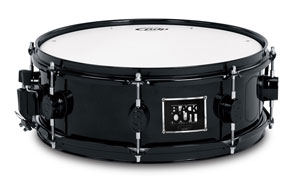
    Pacific Drums & Percussion (PDP) is the DW way of offering affordable drum equipment for entry-level players without leaving aside the top-notch quality that makes this company one of the most respected in the drum industry. Recently released, the visually stealthy but conspicuously sounded Blackout Snares were introduced to the market in four distinctive sizes, 6x10”, 4x13”, 6x14” and 5x14”, and featuring all-maple shell construction. I’ve had the chance to put my hands (and sticks) on the PDP Blackout 5x14” and here are my thoughts about it.


    CONSTRUCTION
    As for first impressions, this pitch-black lacquered finish PDP snare has a stunning and especially “bad ass” look to it, which can excite any dark-minded type of drummer such as the one who is writing this article. Since look normally has little or nothing to do with sound quality, I turned my investigative mind set on and tried to go in-depth on its construction features. A closer look at its hardware pieces was enough to discover some of the reasons why this snare drum is sold for such affordable price, but also to discover a few really nice features that give it some crucial positive points. Starting with the shell, the choice for Maple wood had a significant impact in the overall quality of this drum. For its not-too-soft / not-too-hard properties, Maple wood is the middle ground of sound projection and tonality when comparing to other woods commonly used in drum making. Maple is the number one wood choice for drum making not only because offers great tonal range but also because of its vast supply. The lacquered finish is decorated with a simple but cool Blackout emblem that will also remind you where this product was manufactured. The construction aspect that I really liked a lot on this drum was its throw-off snare system. Big, bold, black and well built, this piece of hardware has qualities that you could definitely see in a more expensive snare drum, that’s for sure. You don’t realize how important is to have a good quality throw-off system until one breaks apart in your own hands right in the middle of a gig. I personally want thank Pearl for giving me the chance to realize that. There is not much to say about the snare wires since they look like any other conventional ones available with most snare drums sold in the market. As for the, let’s say, more simple construction features, the lugs (not lug receptors) are made of hard plastic which gives this drum not only a “kids snare” look, but also makes me a little concerned about its durability. And speaking of lugs, I wish they had added two more to it. A 10-lug snare drum always tends to be a better-sounding drum than an 8-lug one, in my opinion anyway. As for drumheads, the PDP Blackout series comes with the REMO UK heads that, if you try to search, little information about them can be found. Either way, they are regular single-ply heads, coated on the batter side and clear on the resonant side. As any single ply drumhead, these REMO UKs’ accentuate the resonance and pitch of the drum. I must remark that the batter skin comes with printed numbers in each nearby lug so it helps the tuning of it which it is great for students practicing drum tuning.

    SOUND 
    Now, putting construction aspects aside, the main focus is and always will be about the sound of the instrument. I’ve played in the past with cheap drums that sounded just great and with expensive ones that were just not worth the money they used for building it. But those usually are just “exceptions to the rule”. To find out if the Blackout 5x14” snare was one of those exceptions I had to do what it was build and meant to do. I brought it to my kit and rehearsed and finally gigged with it. I usually play with a Yamaha Steve Gadd Signature snare that shares similar features with the PDP Blackout, they are both maple shells, they have almost identical dimensions but very different prices. The 5x14” snares are known for producing strong attack because of its diameter, but short decay because of its shallow depth. I installed both snares with exact same heads (Evans G2 and Hazy 300 resonant) and tuned them to about the same pitch. By switching snares every couple of tunes I could really better understand the characteristics of the PDP Blackout. What really impressed me was that in the overall sound aspect it did sound very comparable to its more expensive nemesis. Strong crisp attack, quick decay and vivid presence. The only real difference fell in their overall drum tone. While the Yamaha’s gave me a refined, solid and round tone, the PDP produced a slightly weaker and unbalanced one.

    Regarding my overall experience with the PDP Blackout 5x14” snare I must say that the $150.00 you will spend on it will be well worth it, but also, you won’t be getting much else. It really is “you get what you pay for” situation here. I would personally recommend investing on some new heads as soon you purchase this snare, it will definitely improve its sound by a mile. The Blackout series has the sole purpose of giving you a really decent sounding snare for those with a tight budget. Since most drum sets sold in America don’t include a snare drum with the purchase, the Blackout can be a good place to start. If you already have an entry-level snare I would recommend you to save your money; then save some more, and then acquire one of the DW pro-quality snare drums. They really are a completely different story.

    For more information about the Blackout Series as also for PDP's complete snare drum line, please visitwww.pdpdrums.com